
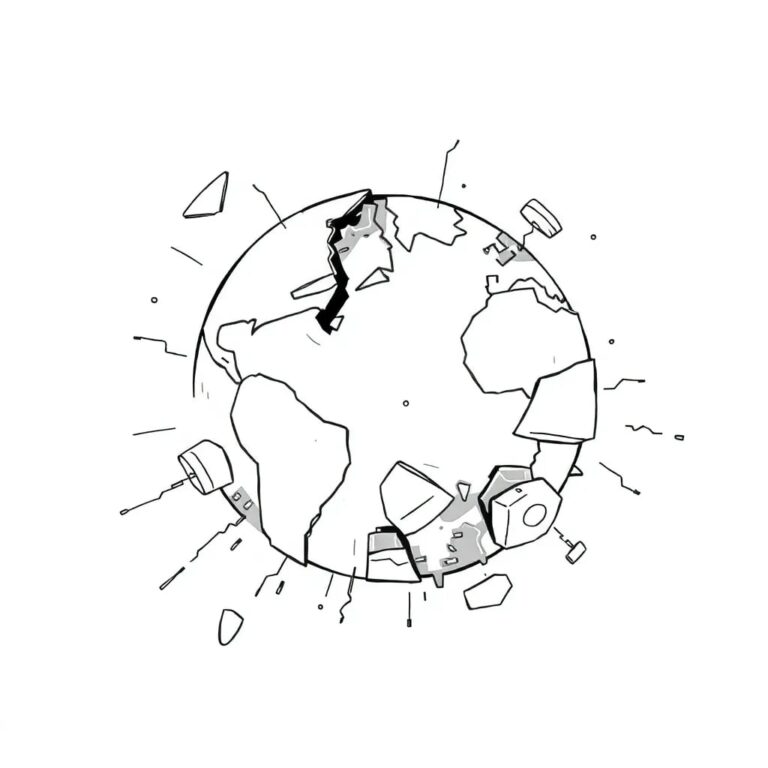
The High Cost of Sovereignty in the Age of AI
As we navigate the first months of 2026, the “borderless” era of cloud computing is officially yielding to a new reality: the Sovereign AI Stack. For multinational enterprises, the dream of a single, global AI architecture is colliding with the hard reality of geopolitics and regulation.
The 2026 Landscape
According to the latest IDC FutureScape: Worldwide AI-Fueled Business Strategies 2026 Predictions, a critical forecast has emerged that will shape IT strategies for the remainder of the decade:
By 2028, 60% of multinational firms will split AI stacks across sovereign zones, tripling integration costs as regulatory fragmentation and supply chain risks slow strategic scaling.
This prediction reflects a fundamental shift in how AI is architected, deployed, and paid for. Below, we explore the market events driving this fracture and offer guidance for CIOs navigating this costly new landscape.
Why the Split is Happening Now
The drive toward fragmentation is measurable, not theoretical anymore. According to recent IDC data, 63% of organizations are now more likely to adopt sovereign cloud services specifically as a result of recent geopolitical events. This shift is reshaping the technology stack at two distinct layers:
1. Infrastructure Layer: Hardware Segmentation
Reliance on chips, servers, and hyperscaler platforms is becoming increasingly segmented by region. Multinationals are being forced to source hardware and cloud partners within specific “sovereign zones” to avoid supply chain choke points. This is driving countries to push for local manufacturing and vendor diversification to reduce external dependencies.
2. Platform Layer: The “East vs. West” Divide
Compliance with local regulations is introducing massive integration hurdles. We are seeing the emergence of distinct “East versus West” AI stacks, where organizations must operate across rival spheres without locking themselves into one. Data privacy obligations are tightening restrictions on how AI models are trained, demanding that information stays strictly within national borders.
The Market Response: AWS Validates the Sovereign Cloud
On January 15, 2026, Amazon Web Services (AWS) announced the General Availability (GA) of the AWS European Sovereign Cloud.
- The Details: Launching its first region in Brandenburg, Germany, this new infrastructure is “physically and logically separate” from existing AWS Regions.
- The Scale: With a planned investment of €7.8 billion through 2040, it is a massive infrastructure bet that European data must stay in Europe, operated by EU residents, under a distinct legal entity.
- The Expansion: Plans are already underway to expand this sovereign footprint with Local Zones in Belgium, the Netherlands, and Portugal, further cementing the “fragmented” map of European cloud computing.
For business and digital leaders, this announcement signals the end of the “wait and see” period. If the world’s largest cloud provider is building physically separate hardware to satisfy regulators, your AI strategy must follow suit.
The Economics of Fragmentation: Why Costs Can Triple
The prediction of “tripling integration costs” is a direct result of operating these parallel environments.
- The Sovereign Premium: Sovereign cloud offerings often carry a price premium over standard regions due to the costs of isolated infrastructure and screened personnel.
- Integration Complexity: Data logic must now navigate complex “airlocks” between zones. Orchestrating an AI agent that needs to access customer data in a sovereign cloud, process it, and report back to a global HQ in a different region requires expensive middleware and governance layers to ensure no data “leaks” across the border.
Guidance for Technology Leaders
Balancing sovereignty demands with innovation goals is creating both a barrier and a long-term differentiator. To survive the split:
- Embrace Hybrid as the Enabler: Hybrid clouds are emerging as the critical enabler of digital agility. You must design architectures that allow you to operate across “East vs. West” stacks without locking into one sphere.
- Sourcing Strategy: Expect sourcing to remain slow and strategic. You will need to weigh resilience against cost and compliance for every major AI workload you deploy.
- Decouple the Model from the Data: Adopt “federated” AI architectures where models travel to the sovereign zone to learn, rather than moving restricted data to a central model.
The fragmentation of the global AI stack is a feature, not a bug, of the 2026 geopolitical environment. The launch of the AWS European Sovereign Cloud proves that the infrastructure layer has already split. The winners in the next couple of years will be the firms that accept this complexity now and build the “connective tissue” to manage a fractured world.
To learn more about the agentic AI era and its impact on enterprise strategy, explore the latest FutureScape predictions.







