
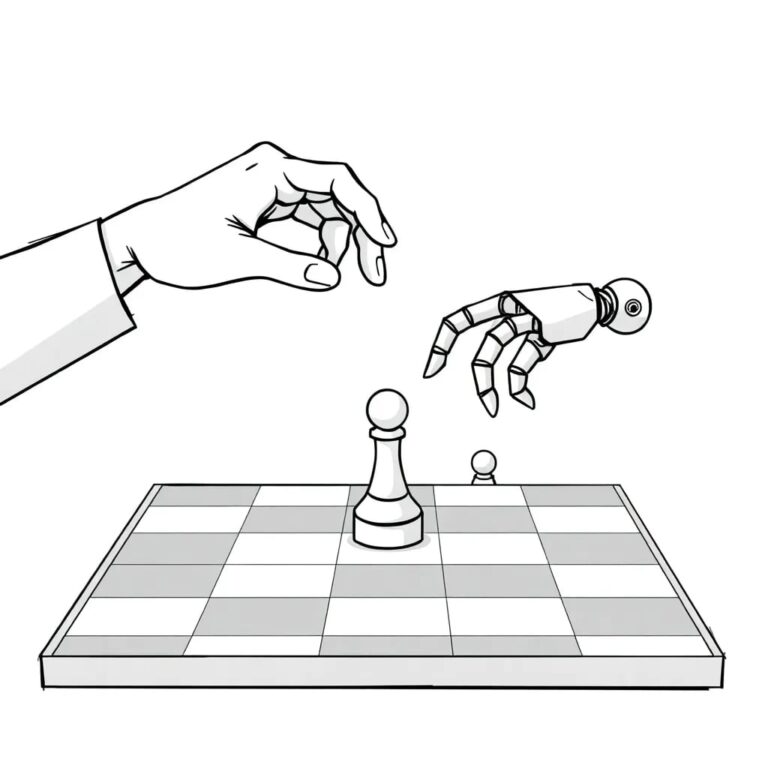
Can Workers Compete with Machines and Stay Relevant in the AI Era?
As artificial intelligence (AI) permeates every aspect of our lives, the debate surrounding its impact on the workforce intensifies. The United Nations has long advocated for a “people-first” approach to AI, emphasizing the necessity for human oversight in AI decision-making processes.
The UN’s Call for Oversight
UN Secretary-General António Guterres warned the Security Council in 2024 that humanity’s future “must never be left to the ‘black box’ of an algorithm.” This sentiment underscores the importance of maintaining human control over AI to safeguard human rights.
Key Ideas for the Future
In response to the challenges posed by AI, the UN has consolidated efforts toward the ethical governance of AI, building on the guidelines from the Global Digital Compact. Here are some pivotal ideas:
1. Education is Key
The UN emphasizes education as crucial for ensuring individuals remain relevant in an AI-driven future. It is not merely about integrating AI tools into educational systems but ensuring that students and educators are “AI-literate.”
Shafika Isaacs, head of technology and AI in education at UNESCO, notes, “The global education system will need 44 million teachers by 2030. We believe that investing in teachers is far more critical than solely focusing on AI technologies. Education is fundamentally a social, human, and cultural experience and not merely a technical download.”
2. Embrace the Change
Concerns about job losses due to AI are prevalent, with the World Economic Forum estimating that 41% of employers planned workforce reductions due to AI advancements in 2025. However, new roles that combine human strengths with machine capabilities are expected to emerge.
The International Labour Organization (ILO) predicts that while one in four jobs may be transformed by AI, this does not equate to net job losses. Workers must be highly adaptable and open to continuous learning and skill development.
3. Make AI Available for All
Currently, a few tech giants dominate AI research and tool development. The UN warns that unless access to AI technology is broadened, existing inequalities will exacerbate. Strategies developed by the UN stress that educational, economic, and governance policies must ensure that the benefits of AI are widely shared, not just confined to the privileged.
4. Put Human Rights First
The UN consistently stresses that AI development must respect human rights and inclusiveness. Unchecked automation could lead to significant social repercussions. In 2021, UNESCO released recommendations asserting that human rights must be the foundation of sustainable AI systems, advocating for restrictions on tools that threaten dignity, equality, or freedom.
5. Global Cooperation is Essential
The challenges posed by AI cannot be addressed by any single entity—government, private sector, or civil society. The UN calls for enhanced international collaboration to manage the risks and opportunities associated with AI. This includes dialogues on governance and ethics, and partnerships between public and private sectors to fund education and workforce development.
In summary, as AI continues to advance, a collective effort is required to ensure that workers remain relevant and that the benefits of AI are equitably distributed while upholding human rights and dignity.







