
States Forging Ahead with New AI Laws Despite Federal Opposition
Artificial intelligence (AI) innovation has rapidly transitioned from experimental phases to operational applications, with businesses increasingly deploying generative and agentic AI tools across various sectors. These tools are now integral to marketing campaigns, pricing models guided by machine learning, customer engagement via chatbots, and the integration of AI into employment, healthcare, and creative workflows.
As the demand for clarity regarding the development, training, deployment, and consumer disclosure of AI models intensifies, businesses are navigating a regulatory landscape that remains largely undefined at the federal level. With no comprehensive federal law governing AI, states have taken it upon themselves to create their own regulations, contrasting sharply with the current administration’s preference for a light-touch regulatory approach.
State-Level Legislation
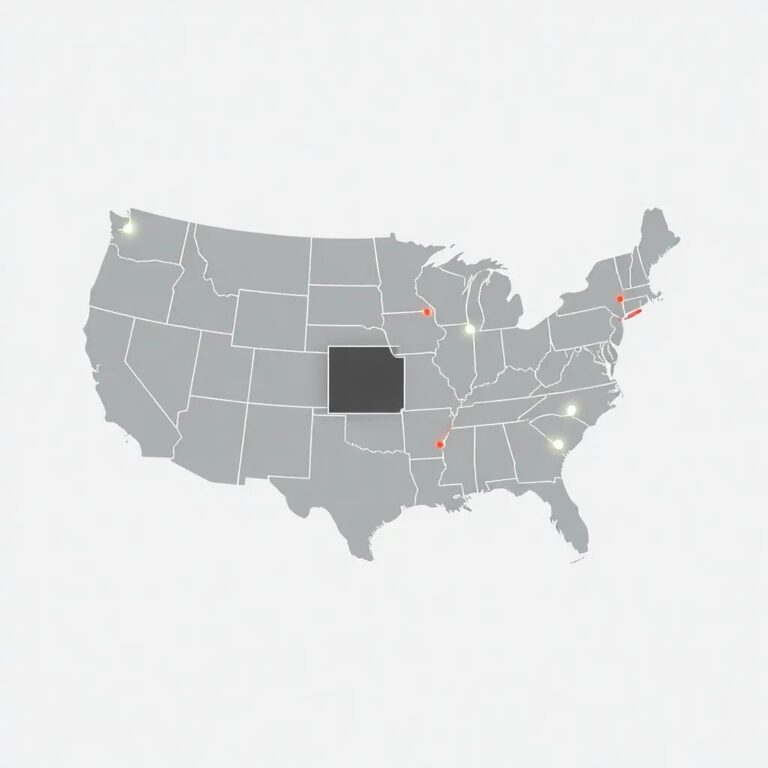
Despite the lack of federal oversight, numerous AI-related bills were proposed at the state level in 2025, with 44 states enacting at least one AI law. This has resulted in a patchwork of regulations addressing various applications of AI, including chatbot disclosures, digital performer labeling, and regulations on algorithmic pricing.
Federal AI Regulation
The only significant federal law addressing AI focuses on a specific issue: nonconsensual intimate imagery, including AI-generated deepfakes. The TAKE IT DOWN Act, enacted on May 19, 2025, criminalizes the nonconsensual publication of intimate images and mandates the rapid removal of such content by platforms. This law achieved overwhelming support from Congress, a feat not matched by any other federal AI legislation.
Another proposal, the DEFIANCE Act, aims to allow victims of deepfakes to initiate civil suits against AI providers and is currently under consideration in the House.
States Filling the Void
In the absence of federal regulations, states like Colorado, Utah, and Texas have enacted comprehensive AI laws. These laws aim to address broad aspects of AI development and deployment, rather than focusing on narrow issues. For instance, the Colorado AI Act aims to protect consumers from algorithmic discrimination in crucial areas such as employment, healthcare, and housing.
Furthermore, common regulatory trends among states include:
- Transparency and Disclosure: Many state laws require businesses to inform consumers when AI is being used, such as during chatbot interactions.
- Automated Decision-Making: Laws mandating consumer opt-out options for personal information processing in significant decision-making contexts.
- Nonconsensual Explicit Images: Similar to the federal TAKE IT DOWN Act, many states are enacting laws to combat nonconsensual AI-generated content.
- Deepfakes and Digital Replicas: Clarifications regarding the rights of publicity for AI-generated images, including protections for deceased individuals.
- Algorithmic Discrimination: States are beginning to scrutinize algorithm-driven decision-making and pricing models.
Executive Order Challenges State Laws
The Trump administration’s executive order issued in December poses challenges to state laws, advocating for a centralized federal framework and expressing concerns over state regulations that might impose ideological biases or conflict with interstate commerce.
This order directs federal agencies to challenge state laws that may conflict with federal policy and suggests restricting funding to states with diverging regulations.
The EU AI Act Under Review
Meanwhile, AI regulation efforts in the European Union face delays and uncertainties due to similar concerns about stifling innovation. The EU AI Act, introduced in August 2024, is undergoing amendments to reduce business costs and encourage innovation.
2026 Trends to Watch
As the first quarter of 2026 approaches, several trends are anticipated:
- Increased scrutiny and regulation of frontier AI models.
- Proposed laws governing chatbots, particularly their interaction with minors.
- Growing focus on mental health applications in healthcare.
- Continued discussions around automated decision-making and pricing.
- Ongoing tension between federal and state regulations and their impact on AI competitiveness.
Future U.S. Framework and Compliance Strategy
The prospect of a federal framework that preempts conflicting state laws appears unlikely in the immediate future. As businesses navigate this evolving landscape, maintaining compliance with existing state laws is crucial. This proactive approach will position companies favorably as regulatory frameworks continue to develop and solidify.







