South Korea’s Rise as a Leader in AI Safety Regulations

South Korea Poised to Trump EU in AI Safety Laws

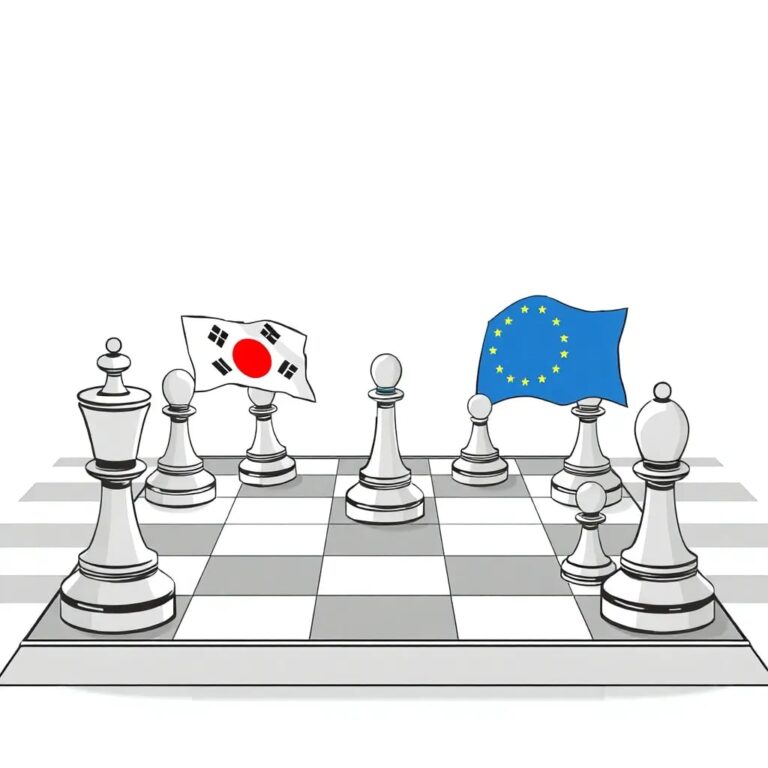
South Korea has enacted its own national AI laws targeting trust and safety, becoming the second major government after the EU to impose sweeping measures. With the EU now pausing some of those restrictions under pressure from the Trump administration, South Korea could emerge as the global leader in AI safety regulation.

The country has also ramped up development of its domestic models as it competes with Europe and the Gulf countries for the third top spot in global AI power, trailing behind the US and China.

Legislative Overview

Passed in December 2024, the laws mandate human oversight on “high impact” AI, which includes technologies that affect nuclear materials, education, drinking water, and medical devices. Products and services utilizing such “high impact” AI are required to disclose their use, and media generated by AI must be clearly labeled to prevent confusion with human-made content.

Investment and Talent Attraction

The policy outlines specific investment areas for the country, including incentives to attract foreign talent, strengthening South Korea’s position in the global AI landscape.

Comparative Penalties

Interestingly, the penalties under South Korea’s laws are not as severe as those in the EU. For instance, failing to label AI-generated content in South Korea could result in fines of up to 30 million won (approximately $20,000), whereas the EU can impose fines of up to €15 million (about $17.6 million) or up to 3% of a company’s annual revenue for similar infractions.

As the global conversation surrounding AI regulation continues to evolve, South Korea is positioning itself as a significant player, ready to lead in establishing frameworks that prioritize safety and trust in AI technologies.


More Insights

Revolutionizing Drone Regulations: The EU AI Act Explained

The EU AI Act represents a significant regulatory framework that aims to address the challenges posed by artificial intelligence technologies in various sectors, including the burgeoning field of...

Revolutionizing Drone Regulations: The EU AI Act Explained

The EU AI Act represents a significant regulatory framework that aims to address the challenges posed by artificial intelligence technologies in various sectors, including the burgeoning field of...

Embracing Responsible AI to Mitigate Legal Risks

Businesses must prioritize responsible AI as a frontline defense against legal, financial, and reputational risks, particularly in understanding data lineage. Ignoring these responsibilities could...

AI Governance: Addressing the Shadow IT Challenge

AI tools are rapidly transforming workplace operations, but much of their adoption is happening without proper oversight, leading to the rise of shadow AI as a security concern. Organizations need to...

EU Delays AI Act Implementation to 2027 Amid Industry Pressure

The EU plans to delay the enforcement of high-risk duties in the AI Act until late 2027, allowing companies more time to comply with the regulations. However, this move has drawn criticism from rights...

White House Challenges GAIN AI Act Amid Nvidia Export Controversy

The White House is pushing back against the bipartisan GAIN AI Act, which aims to prioritize U.S. companies in acquiring advanced AI chips. This resistance reflects a strategic decision to maintain...

Experts Warn of EU AI Act’s Impact on Medtech Innovation

Experts at the 2025 European Digital Technology and Software conference expressed concerns that the EU AI Act could hinder the launch of new medtech products in the European market. They emphasized...

Ethical AI: Transforming Compliance into Innovation

Enterprises are racing to innovate with artificial intelligence, often without the proper compliance measures in place. By embedding privacy and ethics into the development lifecycle, organizations...

AI Hiring Compliance Risks Uncovered

Artificial intelligence is reshaping recruitment, with the percentage of HR leaders using generative AI increasing from 19% to 61% between 2023 and 2025. However, this efficiency comes with legal...





