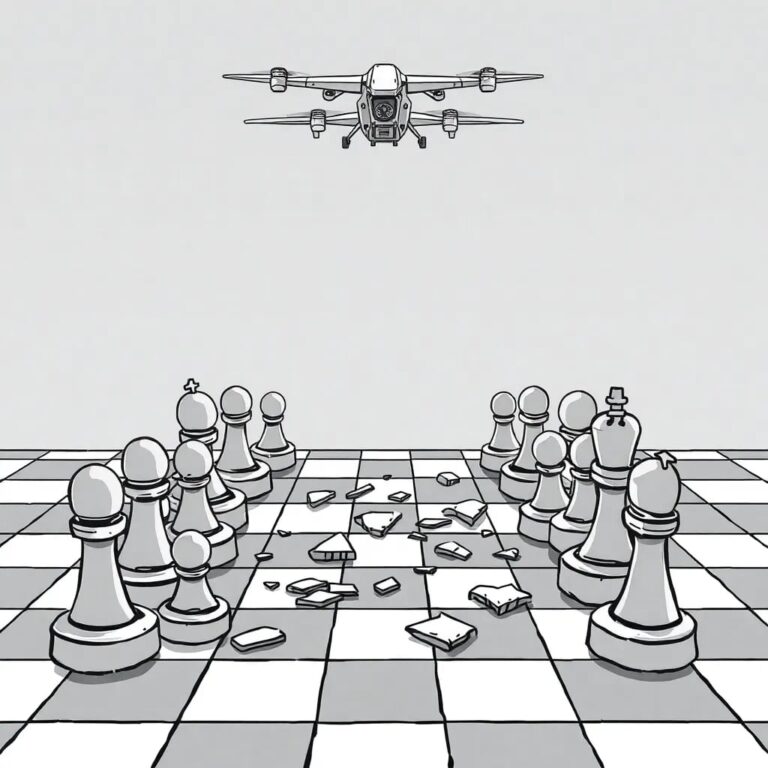
Pentagon Considers Split with Anthropic Over AI Military Ethics

Pentagon and Anthropic Clash Over AI Ethics in Military Operations

The Pentagon is reportedly considering severing its ties with Anthropic, an artificial intelligence company, due to disagreements concerning the deployment of AI technologies in military contexts. According to an Axios report, Anthropic has implemented certain restrictions on its AI models, which the Pentagon views as a significant hurdle.

Pressure on Leading AI Companies

Four leading AI companies, including Anthropic, OpenAI, Google, and xAI, are currently under pressure from the Pentagon to allow their models to be used for all lawful purposes. Key military areas of interest include weapons development and intelligence collection. Despite these pressures, Anthropic has maintained its ethical constraints.

Significant Operations and Ethical Constraints

Anthropic’s AI model, Claude, has been involved in significant operations, such as the capture of former Venezuelan President Nicolas Maduro. However, the company asserts that discussions with the U.S. government have primarily focused on usage policies, particularly the non-use of its AI models in fully autonomous weaponry and mass surveillance.

This clash underscores the ongoing tension between the advancement of military technology and the ethical implications of deploying AI in combat scenarios.


More Insights

Revolutionizing Drone Regulations: The EU AI Act Explained

The EU AI Act represents a significant regulatory framework that aims to address the challenges posed by artificial intelligence technologies in various sectors, including the burgeoning field of...

Revolutionizing Drone Regulations: The EU AI Act Explained

The EU AI Act represents a significant regulatory framework that aims to address the challenges posed by artificial intelligence technologies in various sectors, including the burgeoning field of...

Embracing Responsible AI to Mitigate Legal Risks

Businesses must prioritize responsible AI as a frontline defense against legal, financial, and reputational risks, particularly in understanding data lineage. Ignoring these responsibilities could...

AI Governance: Addressing the Shadow IT Challenge

AI tools are rapidly transforming workplace operations, but much of their adoption is happening without proper oversight, leading to the rise of shadow AI as a security concern. Organizations need to...

EU Delays AI Act Implementation to 2027 Amid Industry Pressure

The EU plans to delay the enforcement of high-risk duties in the AI Act until late 2027, allowing companies more time to comply with the regulations. However, this move has drawn criticism from rights...

White House Challenges GAIN AI Act Amid Nvidia Export Controversy

The White House is pushing back against the bipartisan GAIN AI Act, which aims to prioritize U.S. companies in acquiring advanced AI chips. This resistance reflects a strategic decision to maintain...

Experts Warn of EU AI Act’s Impact on Medtech Innovation

Experts at the 2025 European Digital Technology and Software conference expressed concerns that the EU AI Act could hinder the launch of new medtech products in the European market. They emphasized...

Ethical AI: Transforming Compliance into Innovation

Enterprises are racing to innovate with artificial intelligence, often without the proper compliance measures in place. By embedding privacy and ethics into the development lifecycle, organizations...

AI Hiring Compliance Risks Uncovered

Artificial intelligence is reshaping recruitment, with the percentage of HR leaders using generative AI increasing from 19% to 61% between 2023 and 2025. However, this efficiency comes with legal...





