
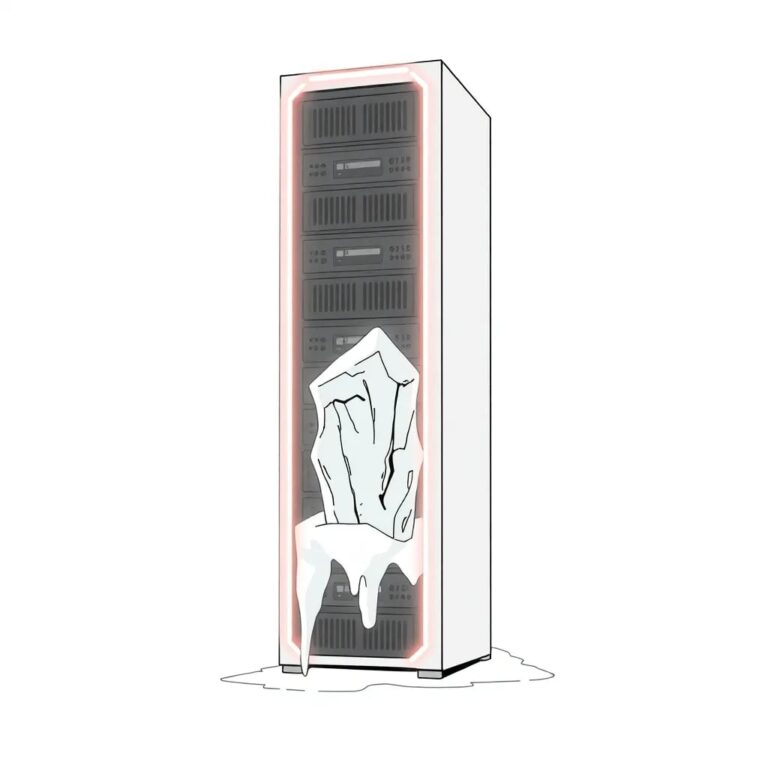
AI Data Centers and the Looming Energy Crisis in the United States
Artificial intelligence is no longer an abstract or future-facing technology. It is an infrastructure-intensive industrial force whose rapid deployment is reshaping electricity demand, land use, water consumption, and public utility regulation across the United States. The most advanced AI systems now rely on highly specialized data centers that consume extraordinary amounts of power — often rivaling or exceeding the electricity demand of traditional heavy industry.
U.S. energy and regulatory systems, however, were not designed for this form of load growth. Federal industrial policy, state environmental law, and utility regulation are evolving on timelines measured in decades, while AI infrastructure expands on timelines measured in months. This mismatch is creating mounting stresses on regional power grids, rising costs for ratepayers, permitting backlogs, and growing legal and political conflict over who should bear the costs of digital expansion.
This paper argues that the AI-driven energy challenge is not primarily a technological problem. It is a governance problem. Without coordinated reform across federal, state, and regional institutions, the continued growth of AI data centers risks undermining grid reliability, slowing decarbonization efforts, and creating significant legal and equity disputes.
I. AI as an Energy-Intensive Industrial Load
Modern AI systems depend on data centers that look far less like traditional office-server facilities and far more like industrial-scale power consumers. Training and operating advanced models require continuous, high-density computing that runs around the clock. As a result, a single AI-focused data center can demand 50 to 100 megawatts of electricity — or more — on a sustained basis, comparable to the load of a small city or a major manufacturing plant.
Unlike prior generations of digital infrastructure, AI workloads do not gradually scale. They arrive as sudden, concentrated loads that must be served reliably at all hours. From the perspective of utilities and grid operators, this resembles the addition of multiple steel mills or chemical plants, often sited with little advance notice and limited opportunity for infrastructure planning.
This shift is being driven in large part by the emergence of specialized AI chips. These processors dramatically increase computational capability, but they also consume far more power per unit than conventional servers. The result is a structural break from past assumptions that digital growth would continue to become more energy-efficient over time.
II. The End of Efficiency Offsets
For much of the past two decades, improvements in computing efficiency have masked the energy implications of digital growth. Advances in server design, virtualization, and cooling allowed data centers to expand capacity without proportional increases in electricity consumption. That era has now ended.
AI systems rely on sustained, computation-heavy workloads that overwhelm prior efficiency gains. Power density within data centers has increased sharply, forcing operators to adopt liquid-based cooling systems and significantly expand on-site electrical infrastructure. These changes carry new environmental and regulatory implications, particularly around water use and land siting.
The key policy point is straightforward: efficiency improvements can no longer be relied upon as a substitute for energy planning. AI growth is now a direct driver of electricity demand, not merely a marginal contributor.
III. Grid Stress and Transmission Constraints
The U.S. power grid was built for a different economy. It consists of three major interconnections — the Eastern, Western, and Texas grids, which largely developed in the mid-20th century. While robust by historical standards, these systems were not designed to absorb large, localized industrial loads on short notice.
Transmission infrastructure presents the most acute constraint. New high-voltage lines often take 15 to 30 years to permit and construct due to environmental review requirements, land-use disputes, and multi-jurisdictional approval processes. By contrast, AI data centers are frequently planned and built in under two years.
This temporal mismatch creates predictable outcomes: interconnection queues grow longer, utilities delay or deny service, and costs are shifted to existing ratepayers. These dynamics are already producing legal conflicts and political resistance in multiple regions.
IV. State Case Studies as Governance Signals
California: Permitting Law Meets Digital Scale
California illustrates how environmental review frameworks can become bottlenecks when applied to modern infrastructure needs. The state’s permitting processes, while rooted in legitimate environmental protection goals, are ill-suited to the speed and scale of AI-driven demand. Transmission upgrades and new substations routinely face years of review and litigation risk, even as electricity demand accelerates.
The result is a paradox: California remains a global leader in AI development but increasingly lacks the physical capacity to support the infrastructure required to sustain that leadership.
Oregon: Decarbonization Without Firm Power
Oregon’s experience highlights the legal tension between climate mandates and reliability obligations. Policies aimed at reducing fossil fuel use have outpaced the deployment of reliable substitutes capable of supporting continuous, high-load demand. Utilities face rising financial strain as they attempt to reconcile decarbonization goals with growing industrial loads from data centers.
This tension raises fundamental questions about how state utility law should balance environmental objectives against reliability and affordability.
Washington: Public Power and Allocation Risk
Washington’s hydroelectric system long provided abundant, low-cost power as a public resource. The rapid redirection of that capacity toward private AI data centers has exposed governance and equity concerns. Long-term contracts with large technology firms have reduced availability for traditional consumers, triggering rate increases and political backlash.
This development raises broader questions about the stewardship of publicly managed energy resources in the digital economy.
Texas: Speed and Exposure
Texas demonstrates the advantages and risks of regulatory flexibility. Its streamlined permitting and competitive energy markets have attracted substantial AI infrastructure investment. At the same time, recent reliability events underscore the vulnerability of a system that prioritizes speed over redundancy.
V. The Limits of Renewables Alone
Renewable energy is expanding rapidly, but it cannot provide the continuous, dispatchable power required by AI data centers without substantial support from storage or firm generation. Battery systems remain limited in duration, and long-duration storage technologies are not yet deployed at scale.
As a result, natural gas, nuclear energy, and existing hydropower continue to play indispensable roles in maintaining grid stability. This reality complicates decarbonization strategies and exposes a growing gap between climate policy aspirations and operational constraints.
VI. Federal Policy and Institutional Gaps
Federal initiatives aimed at advancing AI and domestic semiconductor production have unintentionally intensified energy demand without ensuring corresponding infrastructure readiness. Industrial policy incentives operate on much shorter timelines than transmission development, utility planning, or environmental review.
At the same time, regulatory authority remains fragmented. Federal agencies influence transmission planning and wholesale markets, while states control siting, retail rates, and environmental permitting. No single institution is responsible for aligning AI-driven load growth with grid capacity.
This fragmentation represents a structural risk to both economic competitiveness and grid reliability.
VII. Policy Implications and Path Forward
The AI-energy challenge demands institutional alignment rather than technological optimism. Key priorities include:
- Coordinated and accelerated permitting and transmission planning processes.
- Modernization of utility regulatory frameworks to address rapid load growth.
- Balanced integration of renewable and firm power resources to ensure reliability.
- Enhanced federal-state collaboration on infrastructure investment and policy design.
Absent such reforms, AI growth will continue to collide with energy law and infrastructure limits, producing higher costs, increased litigation, and growing political resistance.
Conclusion
Artificial intelligence is reshaping the American economy, but it is doing so atop an energy system that was never designed to support it. The resulting strain is not a temporary disruption — it is a structural challenge that exposes deep governance gaps in how the United States plans, permits, and pays for critical infrastructure.
Whether AI becomes a durable engine of economic growth or a source of persistent conflict will depend less on advances in computing and more on the willingness of policymakers to modernize the legal and institutional frameworks that underpin the nation’s power system.







