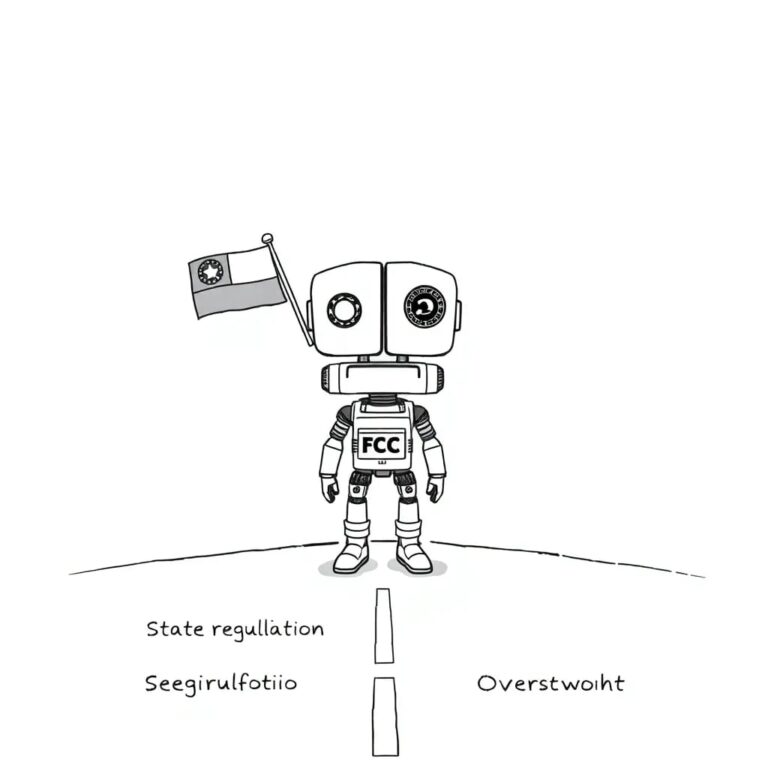
AGs Challenge FCC Over State AI Law Preemption

Bipartisan AGs Urge FCC to Refrain from Preempting State AI Laws

A bipartisan coalition of twenty-three Attorneys General (AGs) has submitted reply comments to the Federal Communications Commission (FCC) in response to a notice of inquiry issued in September 2025. This inquiry examines whether the FCC should preempt state and local laws that regulate artificial intelligence (AI).

Arguments Against Preemption

In their filing, the AGs contend that the FCC lacks statutory authority to preempt state AI laws. They argue that any attempt to do so would undermine the states’ ability to protect consumers and address various harms arising from AI systems and other automated tools. Historically, these tools have been regulated under consumer protection and privacy laws.

Concerns Over Vagueness

The coalition further asserts that the notice issued by the FCC is too vague under the Administrative Procedure Act to warrant any decisive agency action. This vagueness raises concerns about the regulatory clarity necessary for effective governance of AI technologies.

Call to Action

The AGs strongly urge the FCC to refrain from issuing any declaratory ruling that would preempt state AI laws. Instead, they advocate for Congress to determine whether and how federal preemption should be implemented in this critical area of regulation.

Previous Initiatives

This coalition is not the first to oppose federal preemption of state AI laws. Previously, bipartisan AG initiatives included a letter to congressional leaders urging them to reject efforts to incorporate a ban on state AI laws into federal legislation. Additionally, a nationwide bipartisan Task Force on AI has been launched to address these pressing concerns.

The ongoing dialogue surrounding state and federal authority in regulating AI technologies highlights the complexities and challenges faced in ensuring consumer protection while fostering innovation in a rapidly evolving technological landscape.


More Insights

Revolutionizing Drone Regulations: The EU AI Act Explained

The EU AI Act represents a significant regulatory framework that aims to address the challenges posed by artificial intelligence technologies in various sectors, including the burgeoning field of...

Revolutionizing Drone Regulations: The EU AI Act Explained

The EU AI Act represents a significant regulatory framework that aims to address the challenges posed by artificial intelligence technologies in various sectors, including the burgeoning field of...

Embracing Responsible AI to Mitigate Legal Risks

Businesses must prioritize responsible AI as a frontline defense against legal, financial, and reputational risks, particularly in understanding data lineage. Ignoring these responsibilities could...

AI Governance: Addressing the Shadow IT Challenge

AI tools are rapidly transforming workplace operations, but much of their adoption is happening without proper oversight, leading to the rise of shadow AI as a security concern. Organizations need to...

EU Delays AI Act Implementation to 2027 Amid Industry Pressure

The EU plans to delay the enforcement of high-risk duties in the AI Act until late 2027, allowing companies more time to comply with the regulations. However, this move has drawn criticism from rights...

White House Challenges GAIN AI Act Amid Nvidia Export Controversy

The White House is pushing back against the bipartisan GAIN AI Act, which aims to prioritize U.S. companies in acquiring advanced AI chips. This resistance reflects a strategic decision to maintain...

Experts Warn of EU AI Act’s Impact on Medtech Innovation

Experts at the 2025 European Digital Technology and Software conference expressed concerns that the EU AI Act could hinder the launch of new medtech products in the European market. They emphasized...

Ethical AI: Transforming Compliance into Innovation

Enterprises are racing to innovate with artificial intelligence, often without the proper compliance measures in place. By embedding privacy and ethics into the development lifecycle, organizations...

AI Hiring Compliance Risks Uncovered

Artificial intelligence is reshaping recruitment, with the percentage of HR leaders using generative AI increasing from 19% to 61% between 2023 and 2025. However, this efficiency comes with legal...





