
AI System Registry
Register every AI system in your organization. See your full portfolio, drill into components, and track the vendors behind them. AI governance starts with knowing what you have.
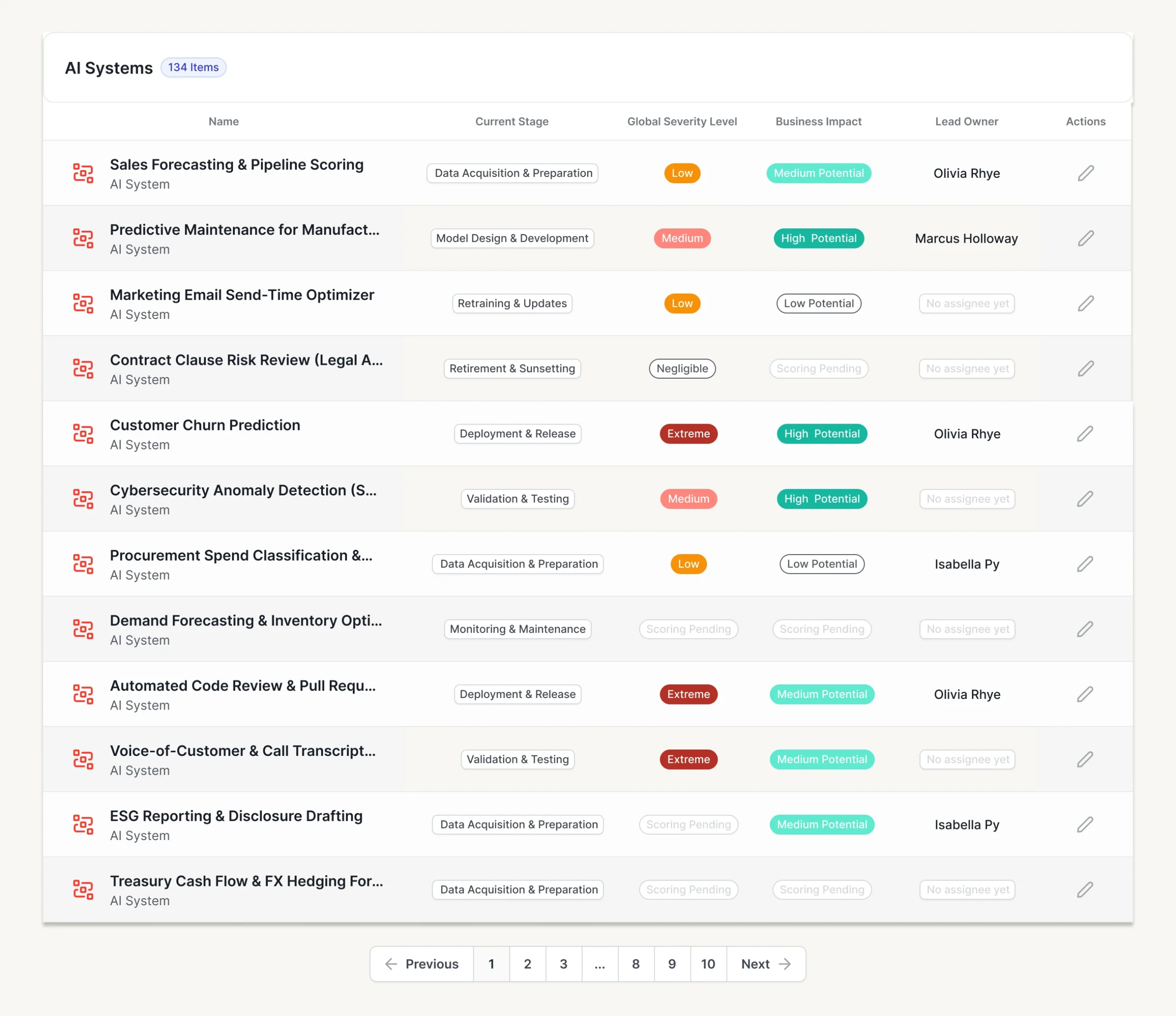
Your full AI portfolio in one view
Lorem Ipsum is simply dummy text of the printing and typesetting industry. Lorem Ipsum has been the industry’s standard dummy text ever since the 1500s, when an unknown printer took a galley.
Map every AI system down to its building blocks
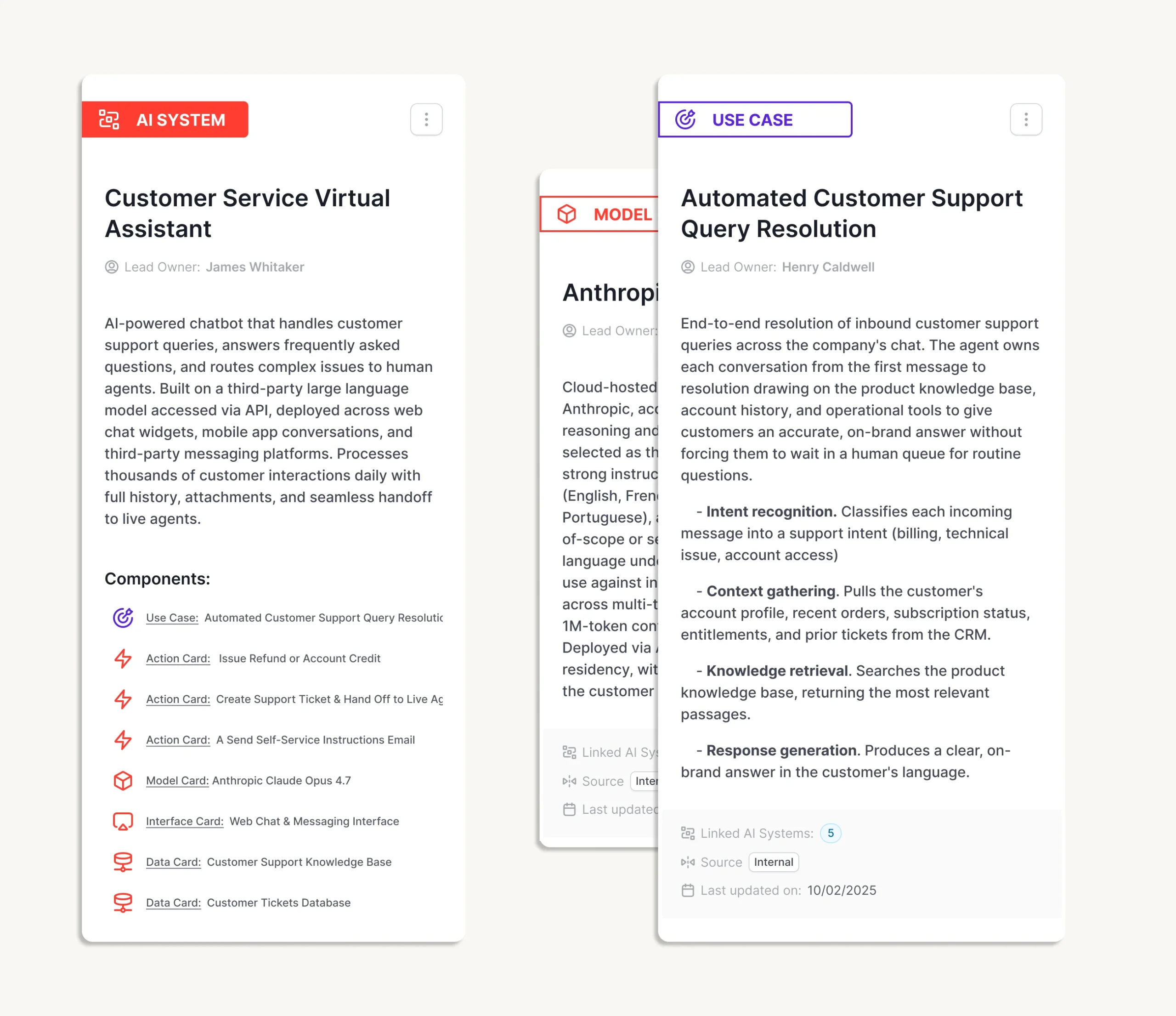
Each AI system is decomposed into its constituent parts: models, datasets, interfaces, use cases, and actions. Components are first-class entities that can be shared across multiple AI systems. Dependencies surface automatically. Your registry mirrors how your AI actually works, not how a spreadsheet approximates it.
Track the vendors behind your AI systems
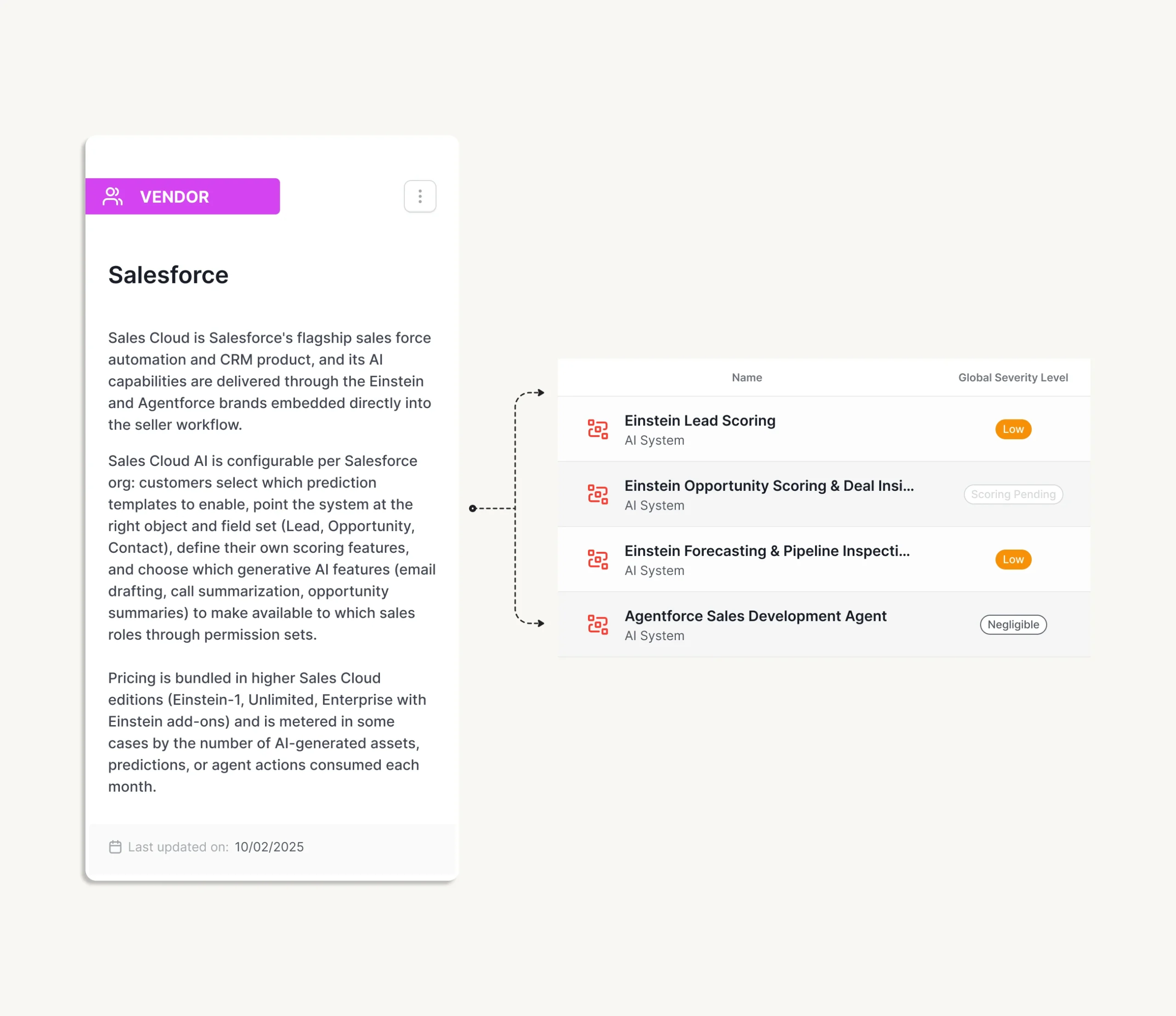
Your AI systems don’t exist in isolation. Models come from providers. Datasets come from suppliers. Infrastructure runs on third-party platforms. AI Sigil lets you register vendors as structured entities and link them to the systems and components they supply. When a regulator asks who provides your model or where your training data comes from, the answer is already documented.
FAQs
What is an AI system registry?
An AI system registry is a structured inventory of all AI systems an organization develops, deploys, or uses. It records each system’s purpose, components (models, datasets, interfaces), risk classification, ownership, and regulatory status. Regulations increasingly require organizations to maintain such registries, and an internal one goes further by connecting each system to its full governance structure.
Why do I need to register AI sub-components separately?
AI systems are not monolithic. A single system may use multiple models, consume several datasets, and expose different interfaces. Registering components separately lets you track shared dependencies (one model powering three systems), assess risk at the right granularity (a bias risk on a specific dataset, not “the AI system”), and maintain accurate documentation when components change independently.
How many AI systems can I register?
The Core plan supports a selected number of AI systems. The Enterprise plan has no limit. Each AI system can have unlimited sub-components, risks, mitigations, vendor links, and framework activations.
Can components be shared across multiple AI systems?
Yes. Sub-components (models, datasets, interfaces, use cases, actions) are independent entities linked to AI systems. One model can be linked to multiple AI systems. When you update the model’s metadata or assess a risk on it, the change is reflected everywhere it’s used.
Who should own an AI system in the registry?
AI Sigil assigns an owner to each entity. Typically, the AI system owner is the product manager or technical lead responsible for the system. Sub-components and vendors can have different owners. Ownership determines who is accountable for compliance tasks on that entity.
How does the registry connect to compliance frameworks?
The registry is the starting point. Once an AI system is registered, you activate compliance frameworks on it. The framework activation creates the full governance structure (obligations, controls, assessments) scoped to that system’s classification. Without the registry, there’s nothing to activate frameworks on.
Why track vendors in the AI registry?
Regulations like the EU AI Act impose obligations on providers, deployers, importers, and distributors. If your AI system uses a third-party model or dataset, you need to document who supplies it and whether they meet your compliance requirements. Vendor tracking in AI Sigil connects this supply chain information directly to the systems and components it affects.
Can I link one vendor to multiple AI systems?
Yes. A vendor entity can be linked to any number of AI systems and sub-components. If a single model provider supplies models for five of your AI systems, that relationship is visible portfolio-wide from the vendor’s profile and from each system’s detail page.
Can I import existing AI system data?
AI Sigil provides onboarding seed data so the platform is not empty on first login. For bulk import of existing inventories, the API supports programmatic entity creation. Contact us for migration assistance from spreadsheets or other tools.
How does the portfolio view differ from a spreadsheet?
A spreadsheet is a flat list you maintain manually. The AI Sigil portfolio view is a live, filterable dashboard that reads from structured data: entities, relationships, computed metafields, and compliance status. Filter by risk level, framework, owner, or any metadata field. Drill into any system to see its components, risks, vendors, and governance status. It stays current because your teams work in it daily.